

Buffer tank
Buffer tank protection with nitrogen
Buffertanks vormen een belangrijk onderdeel van een kasverwarmingssysteem in de tuinbouw. Een goede bescherming van deze buffertanks tegen im- en explosiegevaar en roestvorming zorgt voor een langere levensduur en waarborgt de bedrijfscontinuïteit. Buffertank bescherming met stikstof speelt hierbij een cruciale rol, doordat het de interne omstandigheden van de tank stabiel en veilig houdt.
Nitrogen offers an effective solution for protecting buffer tanks from the inside. Filling the tank with nitrogen displaces oxygen, significantly reducing oxidation and corrosion. This prevents rust from forming on the inside of the tank and protects pipes, pumps, and other connected components from damage. In addition, nitrogen helps stabilize the pressure in the buffer tank, which reduces the risk of leaks and hazardous situations.
Presscon offers solutions that prevent contamination, oxidation, pressure differentials, and fluctuations in the water level in the buffer tank. An advanced nitrogen system continuously maintains a controlled nitrogen layer above the water level. This not only ensures optimal protection of the buffer tank with nitrogen but also contributes to a more efficient and reliable heating system. As a result, maintenance costs are reduced, and the system continues to function optimally over the long term.
Why does a buffer tank need to be protected?
Rust caused by oxygen
Rust forms when the steel buffer tank comes into contact with oxygen and water. In a heating system, this combination is virtually unavoidable unless the tank is actively protected. Oxygen reacts with the steel, leading to oxidation and ultimately corrosion. Over time, this not only damages the tank wall but also the pipes, pumps, and fittings connected to the system.
The consequences of rust formation go beyond mere material loss. Corrosion particles can spread throughout the system and cause blockages or wear in other components. This reduces the efficiency of the heating system and increases maintenance costs. By displacing oxygen from the buffer tank—for example, with a nitrogen blanket—this process can be effectively inhibited, keeping the system in optimal condition for longer.
Pressure Differences: Vacuum and Overpressure
Temperature fluctuations and varying water levels cause constant changes in the volume of water in the buffer tank. Because water expands when heated and contracts when cooled, pressure differences arise in the tank’s expansion chamber. Without a proper control system, these pressure fluctuations can lead to dangerous situations.
If the pressure is too low, a vacuum may develop, which increases the risk of the tank imploding. On the other hand, excessively high pressure can lead to overpressure, potentially resulting in serious damage or even an explosion hazard. These situations pose a threat not only to the buffer tank itself, but also to the safety of the entire system and business continuity.
A well-designed pressure control system maintains a constant pressure in the expansion chamber. By controlled venting of excess pressure or replenishing with nitrogen when there is a vacuum, the buffer tank continues to operate within safe limits. This minimizes risks and ensures that the system continues to operate reliably and efficiently.
How does nitrogen protect a buffer tank?
A buffer tank is not completely filled with water; above the water level is an expansion space that allows the water to expand and contract in response to temperature changes. In a vertical tank, this space is located directly above the water level in the tank. In a horizontal buffer tank, this expansion space is also located above the water, but it can also be housed in a separate expansion tank.
Presscon fills this expansion space with nitrogen. Nitrogen is an inert gas that displaces oxygen and, under normal process conditions, does not react with the water or the tank material. This property creates what is known as a nitrogen blanket above the water surface.
This nitrogen blanket plays a major role in protecting the buffer tank. By displacing oxygen, the oxidation process is significantly inhibited. This substantially reduces rust formation on the inside of the tank and in connected components. This directly contributes to a longer service life for the system and lower maintenance costs.
In addition, the expansion chamber is continuously maintained at a slight, constant overpressure. This overpressure prevents outside air—and thus oxygen and moisture—from entering the tank. At the same time, it helps absorb pressure fluctuations in the system and maintain stability. In this way, nitrogen not only provides protection against corrosion but also ensures the safe and reliable operation of the buffer tank.
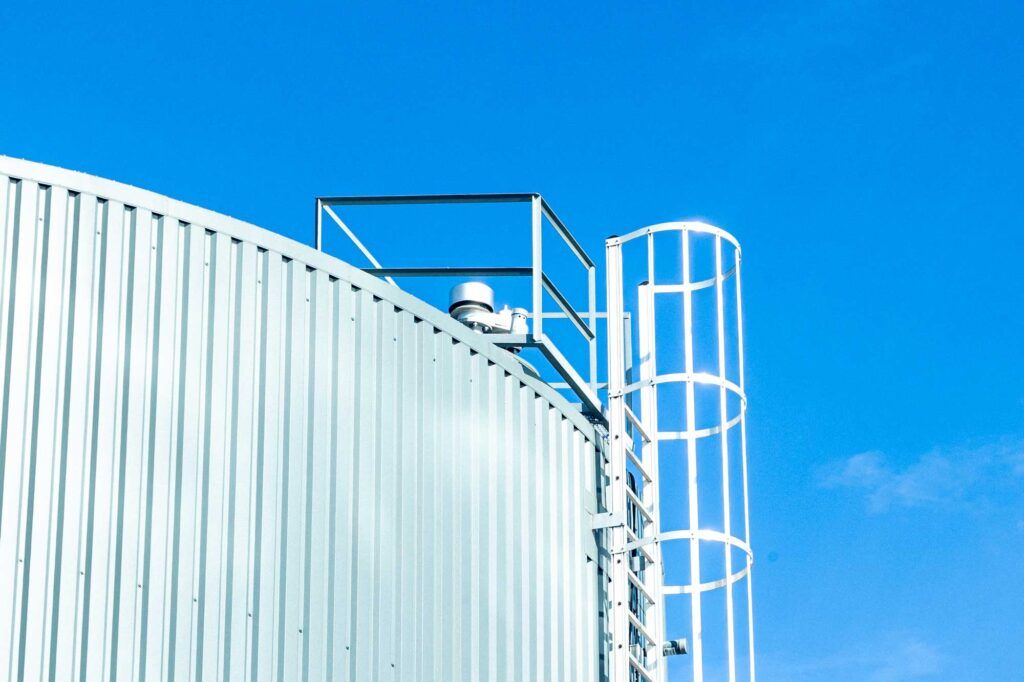
The VERNIT and HORNIT Expansion System
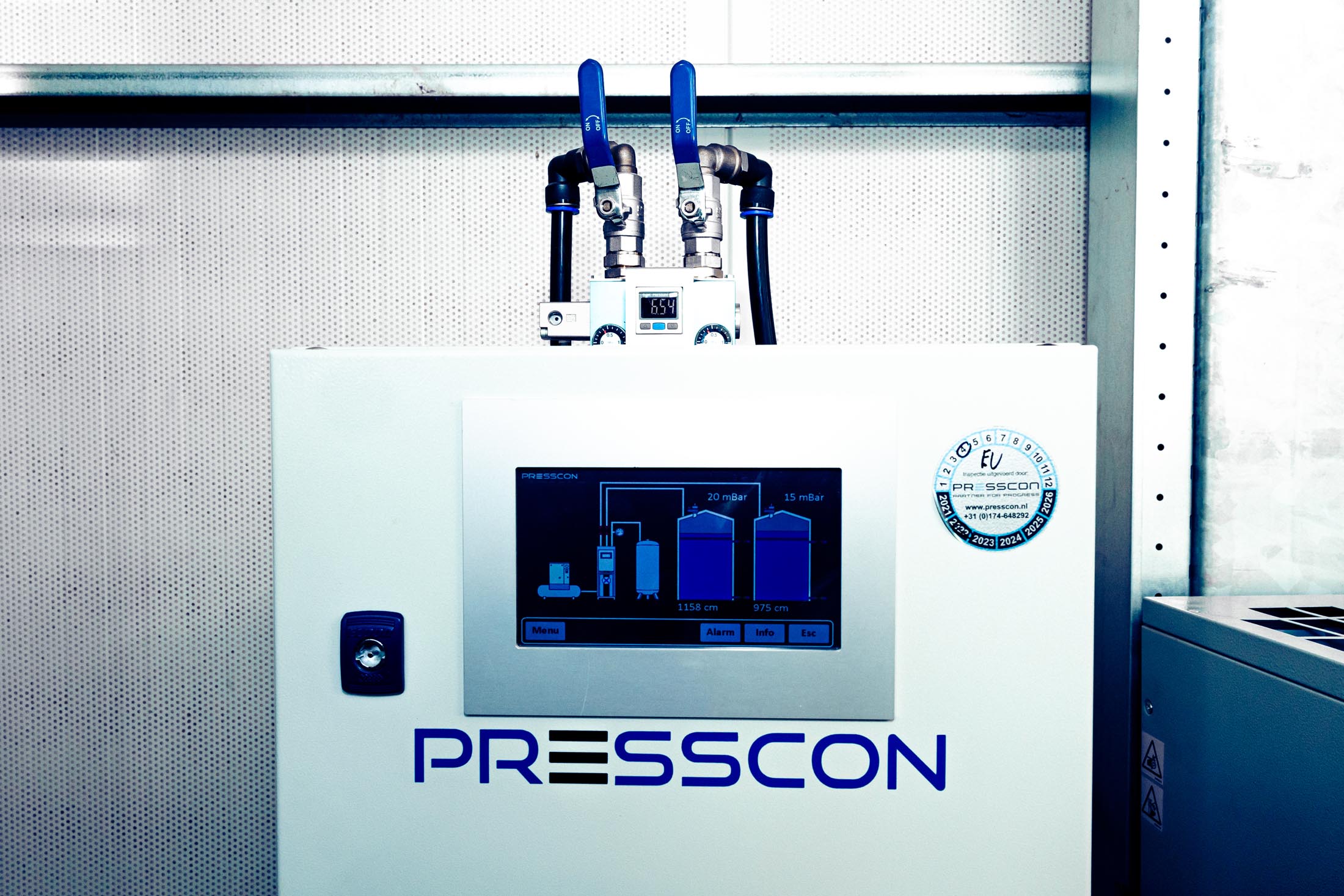
The VERNIT and HORNIT expansion systems form the core of a reliable nitrogen-based buffer tank protection system. These systems have been specially developed to continuously monitor and automatically regulate the pressure in the expansion chamber of buffer tanks. This ensures that the tank remains protected against both corrosion and dangerous pressure differentials.
The operation is based on a closed-loop control system. The VERNIT or HORNIT expansion system continuously monitors the pressure in the expansion chamber above the water level. When the pressure becomes too high, a pressure relief valve opens and allows gas to escape in a controlled manner. When the pressure is too low, the system automatically supplies nitrogen to restore the desired pressure.
The nitrogen is generated by an integrated nitrogen generator, which produces an air mixture with a nitrogen concentration of 99.0 vol.% N2. This ensures effective displacement
from oxygen, thereby providing optimal protection against oxidation. Both systems consist of a nitrogen generator with a compressed air compressor, a set of precise pressure sensors that measure both the water level and the pressure in the tank, and an intelligent control module that manages the entire operation.
VERNIT for vertical buffer tanks
The VERNIT expansion system is specifically designed for vertical thermal storage tanks. The system is designed to precisely control the pressure of the nitrogen blanket above the water level.
Thanks to the properties of VERNIT, this expansion system ensures an optimal balance between safety, durability, and ease of use in vertical buffer tanks.
Key features of VERNIT include:
- Continuous monitoring and control of air pressure
- Maintaining a constant and stable pressure
- Effective nitrogen coverage to prevent oxidation
- Measuring the water level in the tank
- Can be linked to ELC or SLC buffer tank measurements
- Plug-and-play installation for quick deployment
- Adjustable to the desired blow-off pressure
HORNIT for horizontal buffer tanks
The HORNIT expansion system is designed for horizontal thermal storage tanks and regulates the overall system pressure. This can be done directly on the tank or via an external expansion vessel.
HORNIT combines multiple functions into a single system: nitrogen supply, pressure measurement, and level monitoring are integrated with a working pressure valve that maintains a constant pressure in the system. This effectively compensates for pressure fluctuations and ensures that the system continues to operate safely.
In addition, HORNIT offers flexibility in application. Depending on the specific installation requirements, customization is possible, ensuring that the system is optimally tailored to the on-site conditions. This makes it a reliable solution for complex or larger buffer tank systems.
Key features of HORNIT include:
- Continuous monitoring and control of system pressure
- Efficient nitrogen coverage to prevent oxygen intrusion and oxidation
- Measuring the water level and pressure at the top of the buffer tank
- Adjustable to the desired blow-off pressure
- Vacuum safety device to protect the buffer tank
- Can be used with an internal expansion chamber or an external expansion tank
- Customization available for various tank configurations
Pressure Control and Safety Protection
Reliable buffer tank protection using nitrogen requires both precise pressure control and robust safety protection. These two functions complement each other but each plays a distinct role within the system. While the expansion system ensures daily pressure stability, the mechanical safety device intervenes only in exceptional situations.
The VERNIT or HORNIT expansion system continuously regulates the pressure in the expansion chamber of the buffer tank. Temperature fluctuations and changes in the water level cause constant pressure variations. The expansion system automatically compensates for these fluctuations: gas is vented when there is excess pressure, and nitrogen is added when there is negative pressure. This maintains a constant, slight excess pressure and ensures the formation of a stable nitrogen blanket.
In addition to this active pressure control, an extra layer of protection is necessary. Mechanical emergency protection, such as the PV series, only activates when the pressure threatens to exceed safe limits. This completes the system and ensures that risks are kept to a minimum.
Overpressure and Vacuum Protection (PV Series)
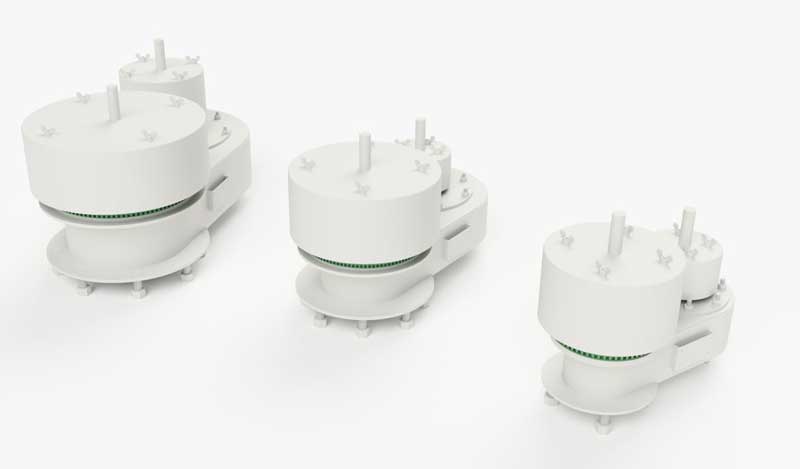
The Presscon PV Series vacuum-overpressure relief valve was specifically designed to protect vertical buffer tanks. It is mounted on the roof of the tank and is suitable for tanks with capacities ranging from a few to thousands of liters.
The PV series operates on the principle of staged protection. As pressure rises, the working pressure valve opens first, allowing excess nitrogen to escape in a controlled manner and reducing the pressure. If the pressure continues to rise despite this adjustment and reaches the maximum limit, the overpressure protection system activates to prevent damage to or failure of the tank.
If a vacuum threatens to develop, the system operates in the opposite direction. The vacuum side opens automatically, allowing outside air to flow into the tank until the pressure difference is eliminated. This prevents the tank from deforming or imploding.
Because the outside air drawn in contains oxygen, this function is intended solely as an emergency measure and not as part of normal pressure control. In standard operation, the expansion system remains responsible for maintaining a stable nitrogen environment. The PV series thus serves as an essential safety feature that intervenes only when truly necessary.
Water Level Control and Monitoring
Stable operation of a buffer tank requires not only effective pressure control but also precise monitoring of the water level. The VERNIT and HORNIT systems combine these functions with smart monitoring, ensuring that anomalies are quickly detected and risks are minimized.
Monitoring Water Levels
The VERNIT and HORNIT systems use pressure sensors to continuously monitor the water level in the buffer tank. This measurement is essential for maintaining the balance between water and expansion space.
If the water level becomes too high or too low, the system immediately issues an error or alarm message. If necessary, the system can also send a stop signal to connected equipment. Among other things, this prevents the water from pressing against the roof of the tank, which can cause mechanical stress. At the same time, it prevents air from entering the spray pipe or the heating network, which can negatively affect efficiency and operation.
Monitoring and Leak Detection
In addition to local monitoring, pressure and water level can also be monitored continuously and remotely. Sensors measure the nitrogen pressure and water level in the buffer tank and transmit this data to a central control system or computer.
In the event of abnormalities, such as a loss of pressure or a sudden change in the water level (for example, due to a leak), the system automatically triggers an alarm. This allows for a quick response before more serious damage occurs. This type of monitoring not only enhances safety but also enables predictive maintenance.
ELC for connected buffer tanks
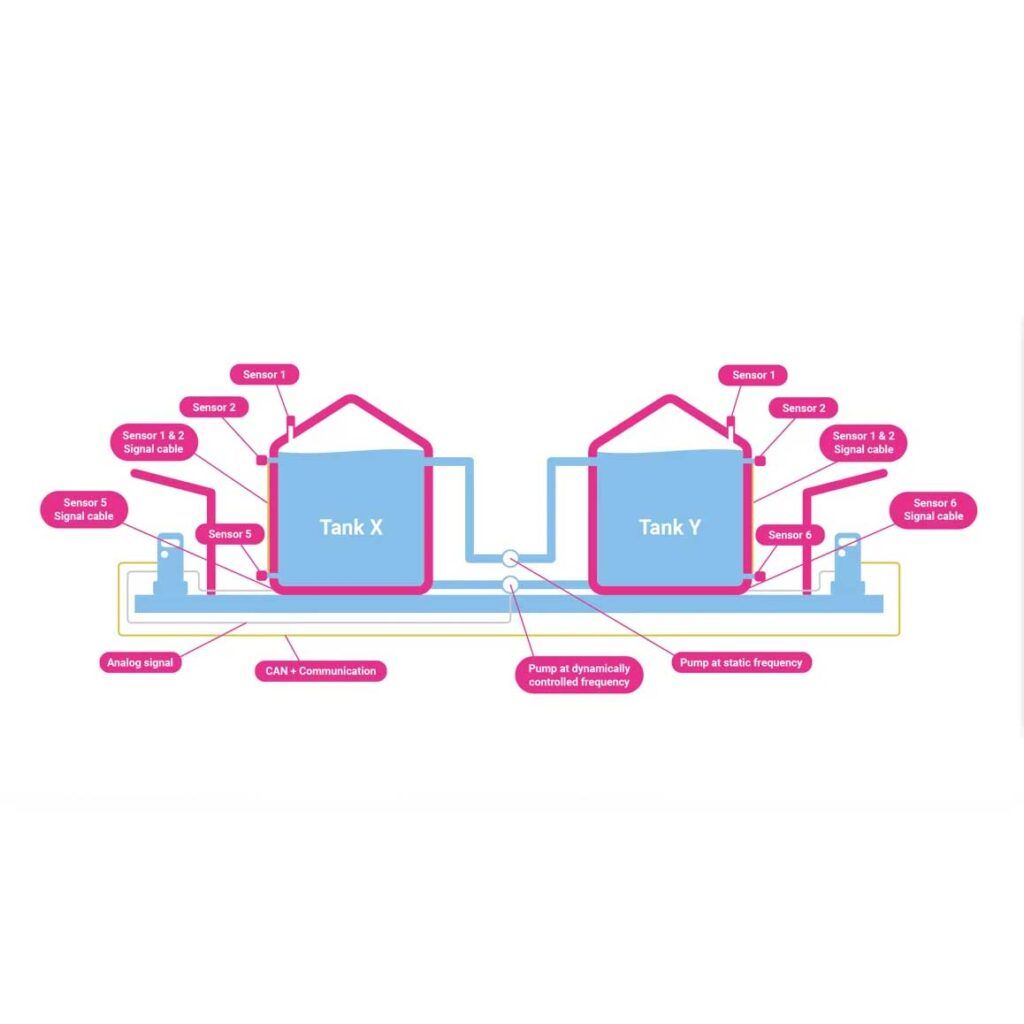
When multiple buffer tanks operate together within a single system, a balanced distribution of water and heat is essential. The Equal Level Control (ELC) system ensures that these tanks function efficiently and as a single unit.
The ELC system transfers heat and water between the various storage tanks and ensures that the mass in each tank remains constant. In addition, the system can determine the direction of the fluid flow based on the heating system’s needs. This ensures that the total storage capacity is utilized optimally and evenly.
The ELC system is designed to match the specific tank configuration and hydraulic system, ensuring that it integrates seamlessly with the existing infrastructure.
Long-lasting protection for buffer tanks
A well-protected buffer tank lasts significantly longer and requires less maintenance and repair work. By minimizing corrosion and pressure problems, the system continues to operate reliably and efficiently throughout its entire service life.
Presscon contributes to this through a sustainable method of nitrogen production. Nitrogen is generated locally using the company’s proprietary HP-PSA technology. In this process, a Carbon Molecular Sieve (CMS) adsorbs oxygen from the compressed air, while nitrogen flows through to the process.
The modular design of the systems ensures that only the necessary generators are operational. This reduces compressed air and energy consumption and increases efficiency. In addition, on-site nitrogen production reduces dependence on gas cylinders and the number of transport trips, which helps lower the environmental impact.
Presscon as a partner for buffer tank protection
Presscon is an experienced partner in the field of buffer tank protection and has more than 30 years of expertise in compressed air, nitrogen, and expansion systems. All systems are designed, assembled, and tested in-house, ensuring high quality and reliability.
Presscon’s strength lies in providing an integrated solution. Nitrogen generators, pressure control, level monitoring, and safety components are combined into a single, complete system that works together optimally.
Each installation is tailored to the specific situation, including:
- Vertical or horizontal tank configuration
- Tank Capacity and Expansion Space
- Workload and Safety Limits
- Desired nitrogen capacity
- Water Level and Temperature Range
- Integration with existing control systems
- Desired Monitoring and Alerts
Why choose Presscon?
- Custom Solutions for Vertical and Horizontal Buffer Tanks
- Integrated Nitrogen Production and Pressure Control
- Protection against oxidation, overpressure, and vacuum
- Continuous pressure and water level monitoring
- In-house engineering and manufacturing in the Netherlands
- Modular and energy-efficient systems
- More than 30 years of technical experience
- Maintenance and 24/7 Service
An Overview of Our Expansion Systems
- Monitor and control air pressure
- Keeps the pressure constant
- Efficient nitrogen cap
- Measure water levels
- Adjustable to desired blow-off pressure
- Monitor and Control Air Pressure
- Keeps the pressure constant
- Efficient nitrogen fixation
- Measure water levels
- ELC – SLC Buffer Tank Measurement
- PLUG & PLAY installation
- Overpressure protection
- Protection against negative pressure (vacuum)
- Suitable for vertical buffer tanks
- Custom development possible
- Working pressure valve for constant pressure
- Moves heat between storage tanks
- Ensures equal mass in storage tanks
- Can determine fluid direction
Questions about nitrogen solutions from Presscon
Presscon specializes in the design, construction, and maintenance of nitrogen expansion systems, fire prevention systems, and innovative solutions using compressed air and nitrogen. Would you like to learn more? Contact Presscon for more information.
Frequently Asked Questions About Buffer Tank Protection
Why is nitrogen used in a buffer tank?
Nitrogen is an inert gas that displaces oxygen. This prevents oxidation and rust formation in the tank and helps keep the system in good condition for longer.
How does the nitrogen pressure in the buffer tank remain constant?
The VERNIT or HORNIT system continuously monitors the pressure. When the pressure is too high, gas is vented; when it is too low, nitrogen is added, thereby maintaining a stable pressure.
What is the difference between VERNIT and HORNIT?
VERNIT is designed for vertical buffer tanks and regulates the pressure of the nitrogen blanket. HORNIT is intended for horizontal tanks and regulates the total system pressure.
How is a buffer tank protected against vacuum?
A vacuum/overpressure relief valve, such as the PV series, opens automatically when a vacuum is detected, allowing air to flow in and eliminating the pressure difference.
Can the water level be monitored remotely?
Yes, water level and pressure can be continuously monitored remotely using sensors and a linked monitoring system
Can Presscon secure an existing buffer tank?
Yes, existing installations can be upgraded with nitrogen, pressure regulation, and safety systems to improve safety and extend service life.