

Tank banketing
Tank blanketing is a method used to protect the vapor space above a liquid inside a storage tank from ambient air. In simple terms, it is the process of filling the empty space of a liquid storage tank with an inert gas, usually nitrogen. This displaces oxygen and maintains a slight positive pressure inside the tank.
A properly designed tank blanketing system helps protect the stored product while reducing oxidation, corrosion, contamination, and fire or explosion risks. It also supports controlled tank pressure during normal filling, withdrawal, and temperature changes.
On this page, we explain what tank blanketing is, how the system works, what a tank blanketing regulator or valve does, and which industries commonly use this method.
Need advice about tank blanketing?
What is tank blanketing?
With tank blanketing, the space above the liquid is filled with an inert gas. Instead of containing normal atmospheric air with approximately 21% oxygen, the vapor space in the tank contains primarily nitrogen.
Nitrogen is suitable as a blanketing gas because of its inert properties under normal process conditions. By displacing oxygen from the tank atmosphere, it creates a more controlled environment around the stored product.
The resulting tank blanket performs two important functions. It limits contact between the stored material and oxygen while helping prevent uncontrolled ambient air from entering the tank.
The process is also commonly referred to as nitrogen blanketing or N2 blanketing when nitrogen is used as the inert gas.
Tank blanketing is particularly relevant for liquids that:
- are sensitive to oxidation or moisture
- can produce flammable or combustible vapors
- may degrade when exposed to air
- require consistent quality during storage
- can contribute to corrosion or unwanted chemical reactions
For these reasons, tank blanketing is used in industrial storage tanks, process vessels, and buffer tanks containing a wide variety of products.
How does a tank blanketing system control tank pressure?
A tank blanketing system works through controlled tank pressure control within the vapor space. The pressure inside the tank is generally maintained slightly above atmospheric pressure. Maintaining this slight positive pressure helps prevent ambient air, oxygen, moisture, and other contaminants from entering the tank. The objective is not to pressurize the vessel to a high level, but to maintain the blanketing pressure within an acceptable operating range. During normal operation, liquid levels change as product enters or leaves the tank. Temperature changes can also affect liquid and vapor volume. The pressure control system must automatically compensate for these fluctuations.
When liquid is removed from the tank
When product is pumped out of a storage tank, the available vapor space becomes larger. As a result, the pressure inside the tank decreases.
A tank blanketing valve or regulator senses the pressure change. When the tank pressure falls below the configured set point, the valve opens and allows blanketing gas to enter the vessel.
Once the pressure reaches the desired pressure, the valve closes again. The pressure then returns to its normal operating range.
This process maintains sufficient pressure in
the tank and prevents ambient air from filling the newly available vapor space.
When the tank is filled
When product enters the tank, the liquid level rises and the vapor space becomes smaller. As the available volume decreases, the pressure increases above the product.
Excess tank vapor must then be released in a controlled manner. Depending on the installation, a separate pressure-control or vapor-recovery arrangement can be used.
Controlling these higher-pressure vapors prevents excessive pressure buildup while limiting unnecessary vapor from escaping into the atmosphere.
This normal pressure-control function should not be confused with emergency tank protection. A gas inlet control valve does not replace a pressure/vacuum vent, relief valve, or other emergency pressure protection required for abnormal operating conditions.
How temperature changes affect tank pressure
Tank pressure can also change without product entering or leaving the vessel.
When the stored liquid and vapor cool, the pressure may decrease. The tank blanketing regulator can then introduce additional gas.
When temperature rises, the contents expand and the tank vapor-space pressure can increase. A correctly designed pressure control system therefore accounts for both process flow and thermal changes.
What is the main purpose of tank blanketing?
The primary purpose of tank blanketing is to control the atmosphere above a stored liquid. The most important reason depends on the specific application, but in many industrial processes several benefits are achieved at the same time:
- Reducing product oxidation: Oxygen can react with stored materials and affect color, flavor, chemical composition, viscosity, or other product characteristics. Lowering the oxygen concentration helps limit these reactions, particularly in oils, food products, chemicals, and pharmaceutical materials.
- Reducing fire and explosion risks: Tanks containing flammable liquids may develop combustible vapors above the product. Reducing oxygen in the vapor space can therefore form an important part of the overall process safety strategy. The required oxygen concentration depends on the stored material and operating conditions.
- Preventing contamination: A slight positive pressure helps prevent ambient air from entering the vessel. This also limits the entry of moisture, dust, and other contaminants, which is especially important for sensitive or high-value products.
- Limiting corrosion: Oxygen and moisture can contribute to corrosion in metal tanks, piping, valves, and other components. Reducing exposure to these substances can help extend equipment service life.
- Reducing product losses and emissions: Volatile liquids can release vapors into the tank vapor space. Controlled tank pressure can help manage these vapors and reduce unnecessary product losses. Depending on the stored material, displaced vapor may be vented, treated, recovered, or routed to a closed vapor-recovery system.
Which industries use tank blanketing?
Tank blanketing is mainly used in industries where liquids are stored in tanks and where oxygen, moisture, pressure changes, or flammable vapors can affect safety or product quality.
Chemical processing
Chemical plants often use storage and buffer tanks for liquids that may be reactive, flammable, combustible, or sensitive to oxygen.
Tank blanketing helps reduce oxygen in the tank vapor space, limiting oxidation and unwanted chemical reactions. It can also reduce ignition risks where flammable vapors are present.
Maintaining a slight positive pressure also helps prevent moisture and ambient contaminants from entering the tank, supporting more stable storage conditions.
Breweries
Breweries use tanks throughout fermentation, maturation, storage, and product transfer. Oxygen entering these tanks can negatively affect beer quality.
A controlled tank blanket helps reduce oxygen exposure in the vapor space while supporting consistent pressure during tank emptying and filling.
This can help protect flavor, aroma, and product consistency while reducing unwanted oxidation during storage and processing.
Food & beverage
Many food and beverage products are sensitive to oxygen during bulk storage. Examples include edible oils, fats, juices, concentrates, and other liquid ingredients.
Exposure to oxygen can affect flavor, aroma, color, and shelf life. In this way, tank blanketing protects food and beverage products by reducing contact with ambient air inside the storage tank.
The system can also help prevent moisture and external contamination from reaching the stored product.
Geothermal installations
Geothermal systems often include buffer tanks, degassing tanks, and other vessels containing process water.
Tank blanketing can be used to keep oxygen away from the water and metal components inside the system. This helps reduce oxidation and corrosion of tank walls, piping, valves, and other components.
Controlled gas pressure can also support stable tank operation when liquid levels or temperatures change.
Where does the nitrogen for a tank blanketing system come from?
A tank blanketing system requires a reliable gas supply. Nitrogen can be supplied through cylinders, liquid bulk storage, or produced directly on-site.
Nitrogen is commonly selected as the blanketing gas due to its inert properties, availability, and suitability for industrial applications.
For facilities with regular or predictable nitrogen consumption, on-site generation can be an effective alternative. It can reduce reliance on external deliveries, gas-cylinder handling, storage requirements, and transportation.
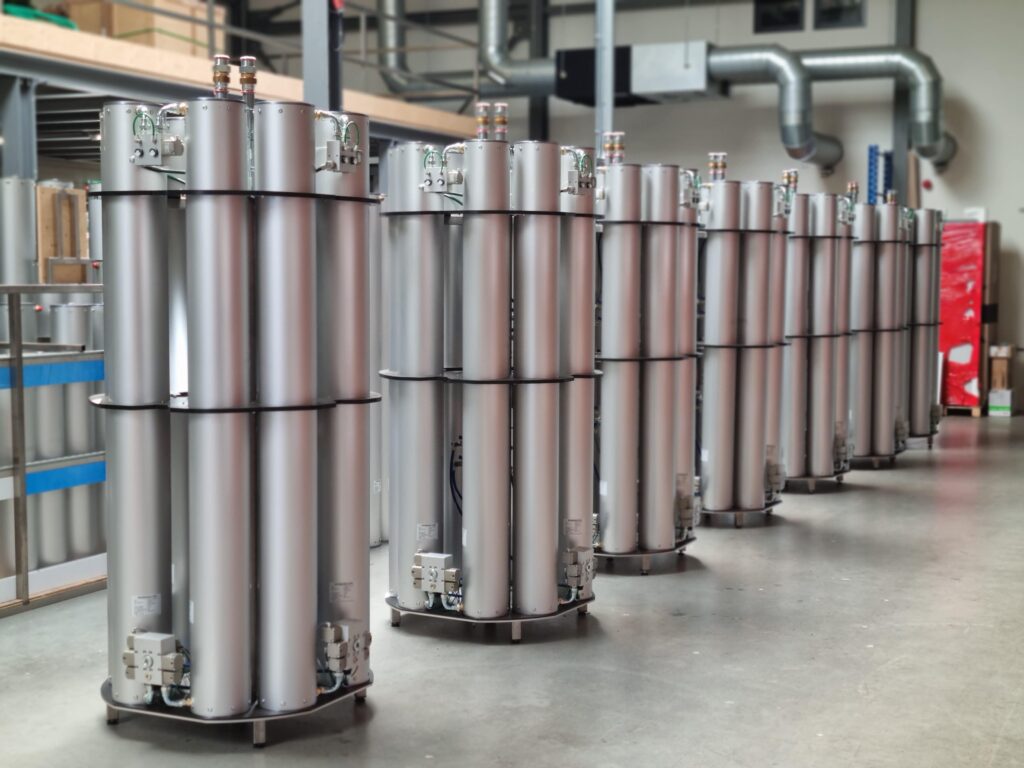
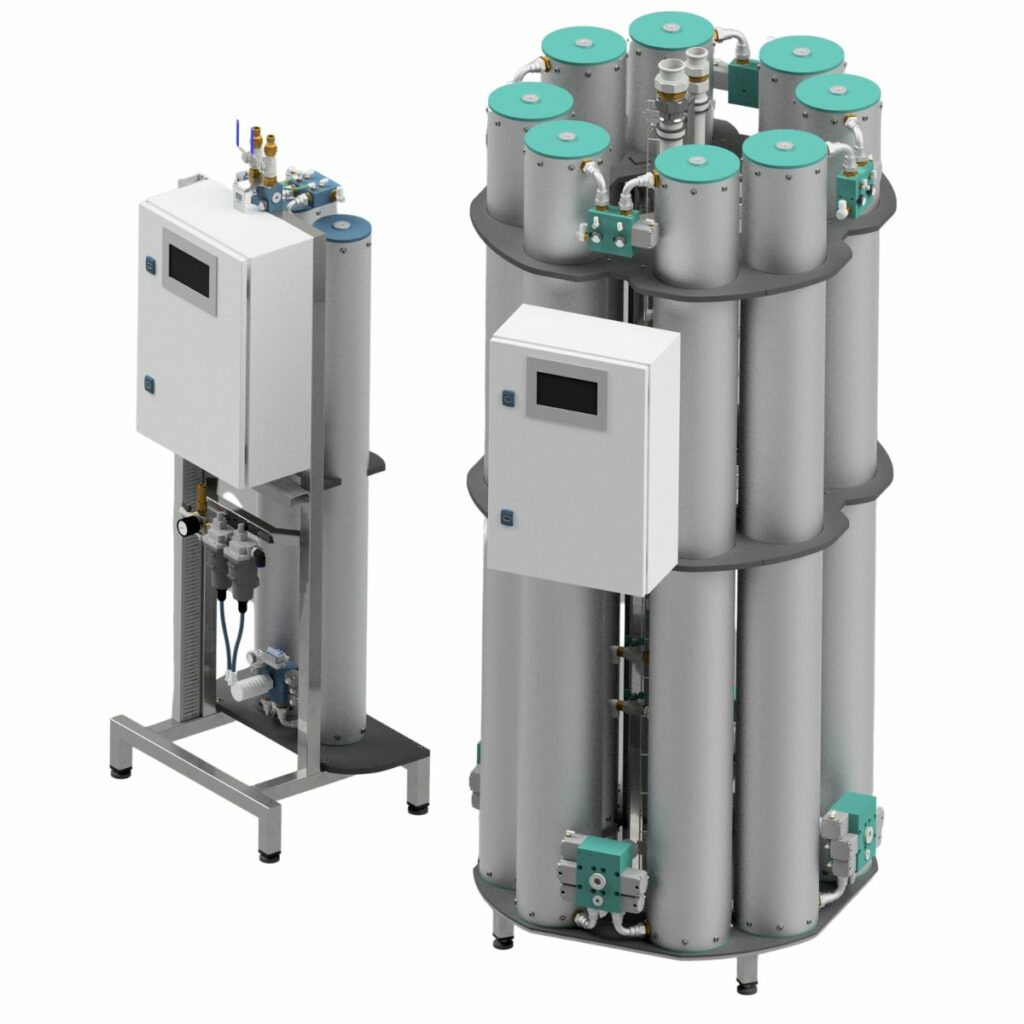
Presscon developed the N-Gen nitrogen generator for on-site production. The system uses HP-PSA technology to separate nitrogen from clean, dry compressed air.
Compressed air passes through columns containing Carbon Molecular Sieve, or CMS. The CMS adsorbs oxygen molecules while nitrogen continues through the system. The columns alternate between production and regeneration, enabling a continuous nitrogen supply.
The N-Gen can be configured according to the required flow and purity. Its modular design also allows individual generator modules to be controlled independently.
What should be considered for tank pressure control?
A reliable installation requires more than a nitrogen source and a tank blanketing valve. The required gas capacity must match the largest expected volume change inside the tank. During rapid product withdrawal, sufficient nitrogen must be available to prevent an excessive pressure drop.
Pressure settings are equally important. Normal operating pressure must remain within the tank’s design limits and must be coordinated correctly with pressure and vacuum protection devices. Materials, seals, piping, and valve components must also be compatible with the stored product and any vapors present in the vessel.
A technical review of the complete tank and gas system is therefore necessary before selecting individual components.
Tank blanketing and on-site nitrogen generation
For facilities that use nitrogen continuously or at regular intervals, the gas supply method also affects energy use, reliability, and operating costs. Presscon designs and manufactures nitrogen generators in-house. The N-Gen uses a modular configuration and can produce nitrogen with purity levels from 95% up to 99.9999%, depending on the application. Its HP-PSA technology is designed to reduce compressed-air and energy requirements. Depending on the configuration and operating conditions, the technology can achieve substantial energy savings compared with conventional PSA or membrane generators.
Producing nitrogen at the facility also reduces dependence on external gas transportation. For industrial sites with consistent nitrogen demand, this can provide both operational and sustainability benefits.
Learn more about controlled tank atmospheres
The correct system depends on tank volume, process flow, operating pressure, product properties, and the required oxygen concentration. Presscon designs and manufactures nitrogen systems in-house and can configure both gas-production capacity and system performance according to the application.
Learn more about our nitrogen blanketing solution for storage and process tanks or contact Presscon for technical advice about your installation.
Questions about nitrogen blanketing?
Presscon specializes in the design, construction, and maintenance of nitrogen expansion systems, fire prevention systems, and innovative solutions with compressed air and nitrogen. Want to know more? Contact Presscon for more information.