

Which nitrogen generator is best suited for my production capacity?
Choosing the right nitrogen generator for your production capacity depends on multiple factors such as your peak consumption, desired purity level, and future expansion plans. For smaller applications with lower purity requirements (95-99%), a membrane generator is often suitable, while PSA technology performs better at higher purity levels (up to 99.999%) and larger volumes. An accurate analysis of your current and future nitrogen needs is essential to prevent overinvestment and ensure operational efficiency. Determining the appropriate nitrogen generator begins with a thorough analysis of your specific business processes and nitrogen requirements. The choice of a suitable generator is directly linked to the efficiency of your production process and operational […]
How do I choose the right nitrogen generator for pest control?
Choosing the right nitrogen generator for pest control depends on your specific application, required capacity and purity level. First determine the volume of your treatment space and type of pest, then choose between a mobile or fixed installation based on treatment frequency, and pay attention to the required nitrogen purity for your sector. A nitrogen generator for pest control produces highly pure nitrogen by filtering oxygen from compressed air. This method eliminates pests through oxygen displacement in enclosed spaces, causing micro-organisms and insects to suffocate without chemical agents. The operating principle is based on the fact that aerobic bacteria and insects require oxygen for their metabolism. By reducing the oxygen level in a […]
What are the differences between nitrogen for MAP and other applications?
Nitrogen for MAP (Modified Atmosphere Packaging) differs in important aspects from nitrogen for other industrial applications. The biggest difference lies in the purity requirements, delivery method, and system configuration. In MAP applications, nitrogen is used to replace oxygen in food packaging with a typical purity of 99.5%, while other applications such as in the electronics industry may require purities up to 99.9999%. The systems for MAP are often optimized for constant, relatively low-pressure production, whereas other industrial applications often need higher pressure or volume-specific configurations. Modified Atmosphere Packaging (MAP) is a technique where the natural air in packaging is replaced by a controlled gas mixture, primarily […]
What is the difference between pure nitrogen and mixed gas for beer tapping?
The most important difference between pure nitrogen and mixed gas when tapping beer lies in their effect on the taste, texture, and presentation of the beer. Pure nitrogen (N2) creates a creamy, fine-meshed foam and a smoother taste experience, ideal for stouts and porters. Mixed gas, a combination of CO2 and N2, offers a balance between carbonation and foam stability, perfect for pilsners and lagers. The choice between both gases depends on the beer type, desired taste experience, and the specific tap system you are using. When tapping beer, the gas used plays a crucial role in the ultimate quality of the poured product. The […]
How long does food stay fresh in MAP packaging with nitrogen?
In MAP packaging with nitrogen, food stays considerably fresher than in conventional packaging. Depending on the type of food, shelf life varies: meat typically stays fresh for 7-14 days, fish for 5-10 days, vegetables for 7-21 days, and fruit for 7-14 days. This technology effectively slows down oxidation and microbial growth by replacing oxygen with inert nitrogen gas. The exact shelf life depends on factors such as initial food quality, packaging integrity, temperature, and hygiene during processing. MAP packaging (Modified Atmosphere Packaging) with nitrogen is a preservation technique where the air in the packaging is replaced by a controlled atmosphere with a high concentration of nitrogen. This method reduces the […]
How do I prepare my compressed air system for future expansion?
Preparing a compressed air installation for future expansion begins with calculating your current and expected air requirements, followed by installing oversized piping and electrical infrastructure. Choose modular compressor systems with parallel configuration and reserve sufficient space for additional compressors. Good planning prevents costly modifications later. Strategic planning for compressed air installations prevents expensive modifications later and optimizes your investments. The difference between planning ahead and expanding afterward can save thousands of euros. When you must expand afterward, problems often arise with undersized piping, insufficient electrical capacity, and space constraints. These modifications require production downtime and additional work on existing […]
What compressors do you need for in-house nitrogen production?
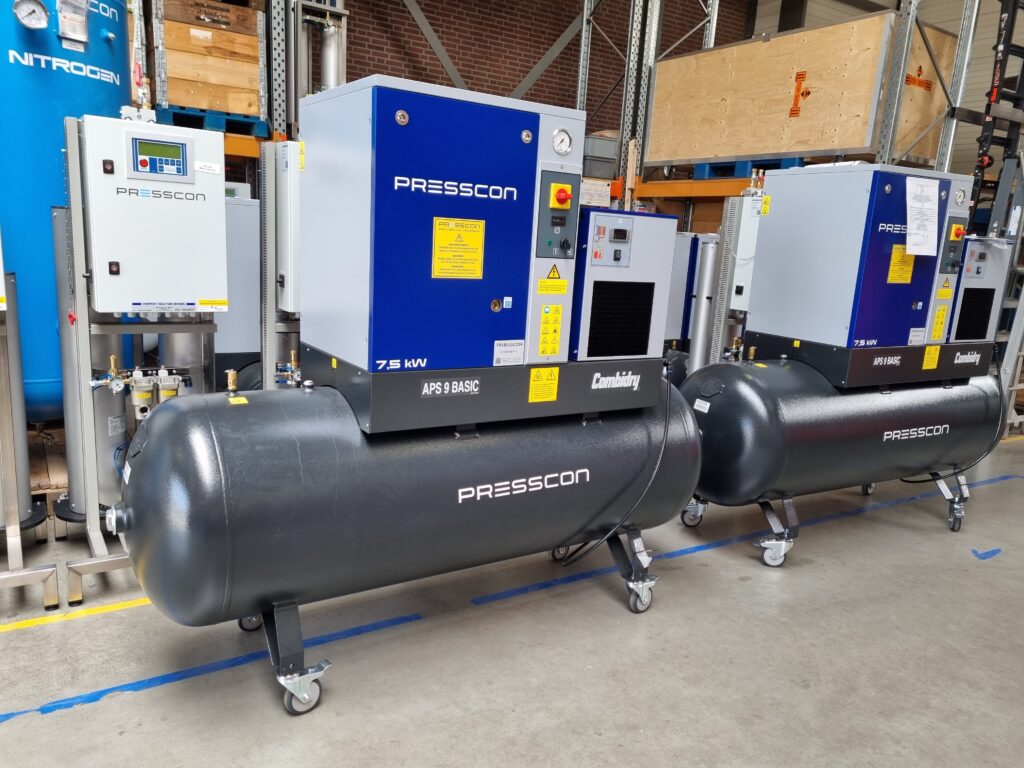
For in-house nitrogen production, you need various compressors depending on your application and production capacity.
How do I identify energy waste in my compressed air system?
You can identify energy waste in your compressed air system by systematically checking for leaks, measuring pressure settings, monitoring energy consumption, and analyzing compressor control. Leak detection using ultrasonic equipment, pressure measurement, and flow measurements provide insight into where energy is being lost, allowing you to take targeted measures for optimal efficiency. Compressed air systems are among the largest energy consumers in industrial environments. Energy waste in compressed air systems occurs because compressed air is an expensive energy source, where only a small portion of the electricity used actually arrives as useful energy at the end user. The problem lies in the inefficiency of the production process. For every kilowatt hour of useful energy, you need approximately […]
What influence does nitrogen treatment have on nutritional value?
Nitrogen treatment generally has a positive influence on nutritional value by preventing oxidation and preserving nutrients. This technique protects vitamins and minerals against degradation by oxygen, allowing fresh products to retain their original nutritional value for longer periods. Modified atmosphere packaging (MAP) and other nitrogen treatments extend shelf life without using chemical preservatives. Nitrogen treatment in the food industry is a preservation method where oxygen is replaced with nitrogen gas to make food last longer. This technique is primarily applied in modified atmosphere packaging (MAP packaging) and bulk storage of food products. In MAP packaging, the air in the package is replaced with a […]
What is the difference between nitrogen from cylinders and generated nitrogen?
Nitrogen from cylinders and generated nitrogen are two fundamentally different methods of supplying nitrogen to industrial processes. With nitrogen cylinders, the gas is stored under high pressure and delivered by an external supplier, while generated nitrogen is produced on-site by a nitrogen generator that filters nitrogen from the ambient air. The main difference lies in the delivery method, initial costs, operational expenses, and suitability for different applications. The choice between these methods depends on your specific needs in terms of purity, consumption volume, and continuity. The two main methods for nitrogen supply in industrial environments are cylinder nitrogen and generated nitrogen. Although the end product (nitrogen gas) is the same […]